
Old Republic Lawyers Specialty Insurance Inc.
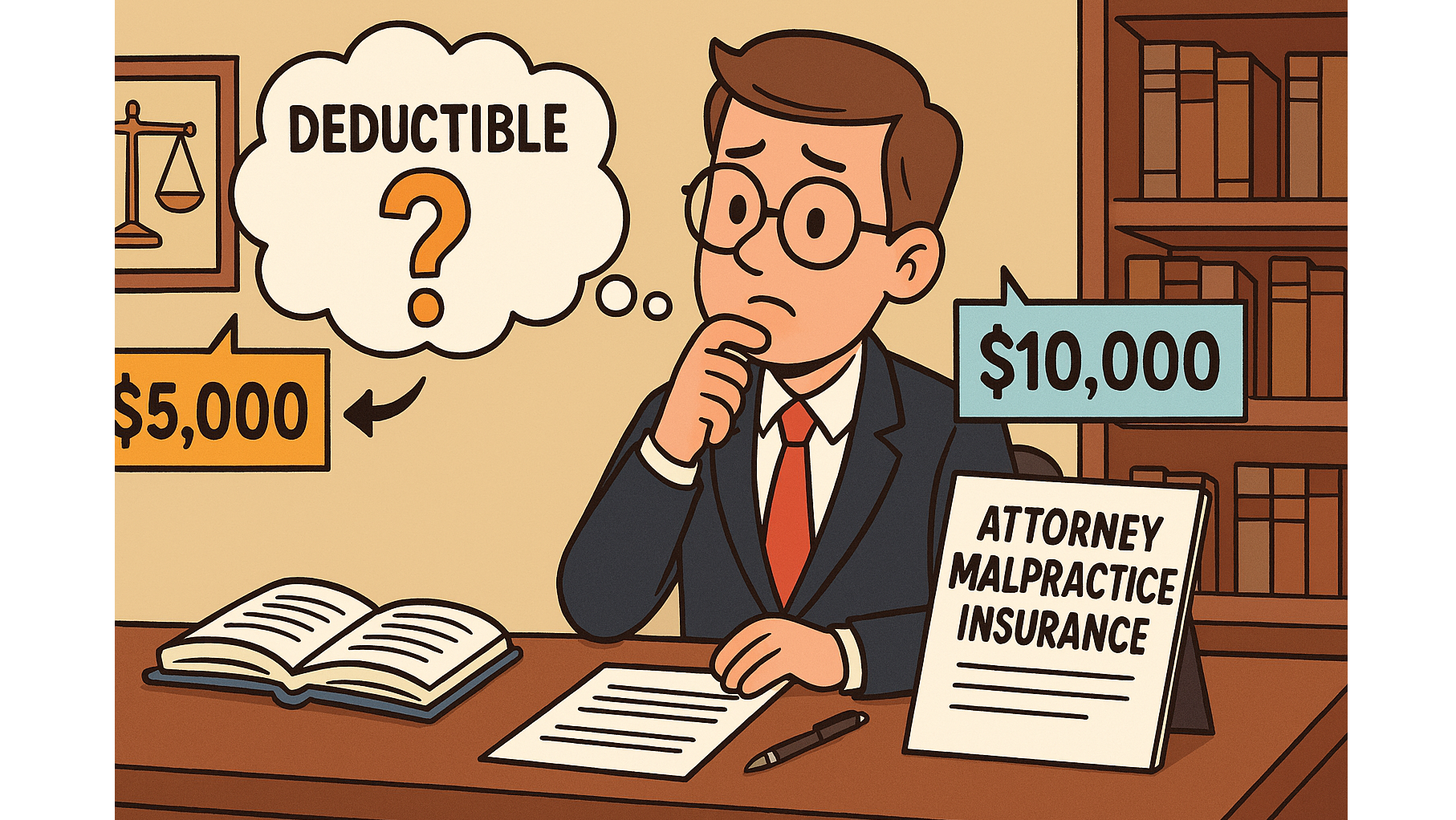
Choosing the Right Attorney Malpractice Insurance Deductible for You
Selecting the right deductible option is a strategic decision that balances risk and financial planning. It’s not just about current needs but also about anticipating future scenarios. The deductible amount sometimes called a retention amount makes up part of the exposure for the firm.
Factors to Consider When Choosing a Deductible Option:
- Financial Stability: Assess your firm’s ability to handle out-of-pocket expenses associated with higher deductibles.
- Claims History: A firm with few or no past claims might opt for higher deductibles to reduce premiums.
- Risk Tolerance: Consider how much financial risk you’re willing to assume versus paying higher premiums.
- Practice Area: Certain legal specializations carry higher risk, influencing deductible choices.
- Firm Size: Larger firms may face more claims, making aggregate deductibles more appealing.
Old Republic Lawyers policy offers the Following Deductible options:
- Per Claim Deductible—the firm is responsible for the deductible on each LPL claim. The policy premium is usually less than any other option. Certain practice areas or firm practices may tend to develop multiple claims in a policy year. A per claim deductible can increase the financial risk to the firm.
- Annual Aggregate Deductible—this limits the firm’s deducible cost to the amount listed as the aggregate deductible. A cap is set on the total deductible amount the firm pays within a policy period. No further deductibles apply for that period once you reach the cap. Aggregate deductibles likely increases the premium.
- 1st Dollar Defense (FDD)–sometimes called a loss only deducible. With FDD the insured is only responsible for the deductible when there is a claim indemnity payment. Without FDD the deductible is due as claims expenses or indemnity payments incur. If the claim results in no indemnity payment, then there will no be a deductible owed. The other advantage of having FDD is that with LPL claims the time between the making of the claim and when an indemnity payment is due could be months if not years. FDD does increase the premium.
Attorney Malpractice Deductible Options by Insurer
The Lawyer Professional Liability (LPL) different deductible options may be part of the policy or provided as an additional charge. Depending on circumstances a firm may chose more than one deductible option. The deductible options can be in the declarations page or via policy endorsement. Old Republic’s policy language that deals with deductibles is as follows:
II. LIMITS OF LIABILITY AND DEDUCTIBLE
c. Deductible
The deductible amount stated in the Declarations for each claim applies to each and every claim made against an Insured. It shall be paid by the Named Insured and applies to the payment of damages and claim expenses for claims both first made against the Insured and reported to the Company in writing during the Policy period. In the event the Named Insured fails to pay, the deductible shall be paid jointly and severally by all Insureds. The limits of liability set forth in the Declarations are in addition to and in excess of the deductible.
If a claim is based on or arises out of the rendering of eleemosynary (pro bono) legal services, no deductible will apply but only where at the time of retention, there was approval by the appropriate committee or lawyer within the Named Insured that the matter would be handled without compensation.
III. SUPPLEMENTARY PAYMENTS AND RISK CONTROL INCENTIVES
Payments made under subparagraphs A. through K. are in addition to the limit of liability. Payments made under subparagraphs A. through J. will not be subject to the deductible.
A. Subpoena Assistance
B. Disciplinary Proceedings
C. Pre-Claim Assistance
D. Regulatory Inquiry
E. Privacy Event Response
F. Public Relations
G. Fee Suit Mitigation
H. Discrimination Complaint
I. Supplemental Claim Expense Benefit
J. Loss of Earnings
K. Early Claim Resolution
If a claim is settled or finally resolved within 364 days of the reporting of such claim to the Company, for an amount recommended to the Insured by the Company, then the Insured’s deductible, applying to that claim, will be reduced by 50%. In no event shall the amount of the deductible waived hereunder exceed $12,500.
However, the deductible will not be waived if the claim is resolved after the commencement of a trial in a court of law or binding arbitration or the first motion for summary judgment filed in a court of law by any party.
To the extent this provision is applicable, and the Insured has paid more than 50% of the deductible, the Company will reimburse the Insured the amount paid in excess of 50% of the deductible, up to $12,500, within 60 days of the final resolution of the claim..
VII. EXTENDED REPORTING PERIODS
E. Extended Reporting Period limits of liability and deductibles
2. Death or Disability Extended Reporting Period and Non-Practicing Extended Reporting Period limits of liability
c. No Deductible
No deductible shall apply to claims first made against the Insured and reported to the Company during the Death or Disability Extended Reporting Period or Non-Practicing Extended Reporting Period.
This blog is an excerpt from the policy. The complete policy along with applicable endorsements could impact the information provided above.
Get Lawyers Liability Insurance Malpractice Insurance Quote

Contact Me Today
Lee Norcross, MBA, CPCU
California License # 0D87292
L Squared Insurance Agency, LLC ® DBA in California as L2 L Squared Insurance Agency, License # 0L93416
Managing Director, CEO
Lee@L2Ins.com
616-726-7080