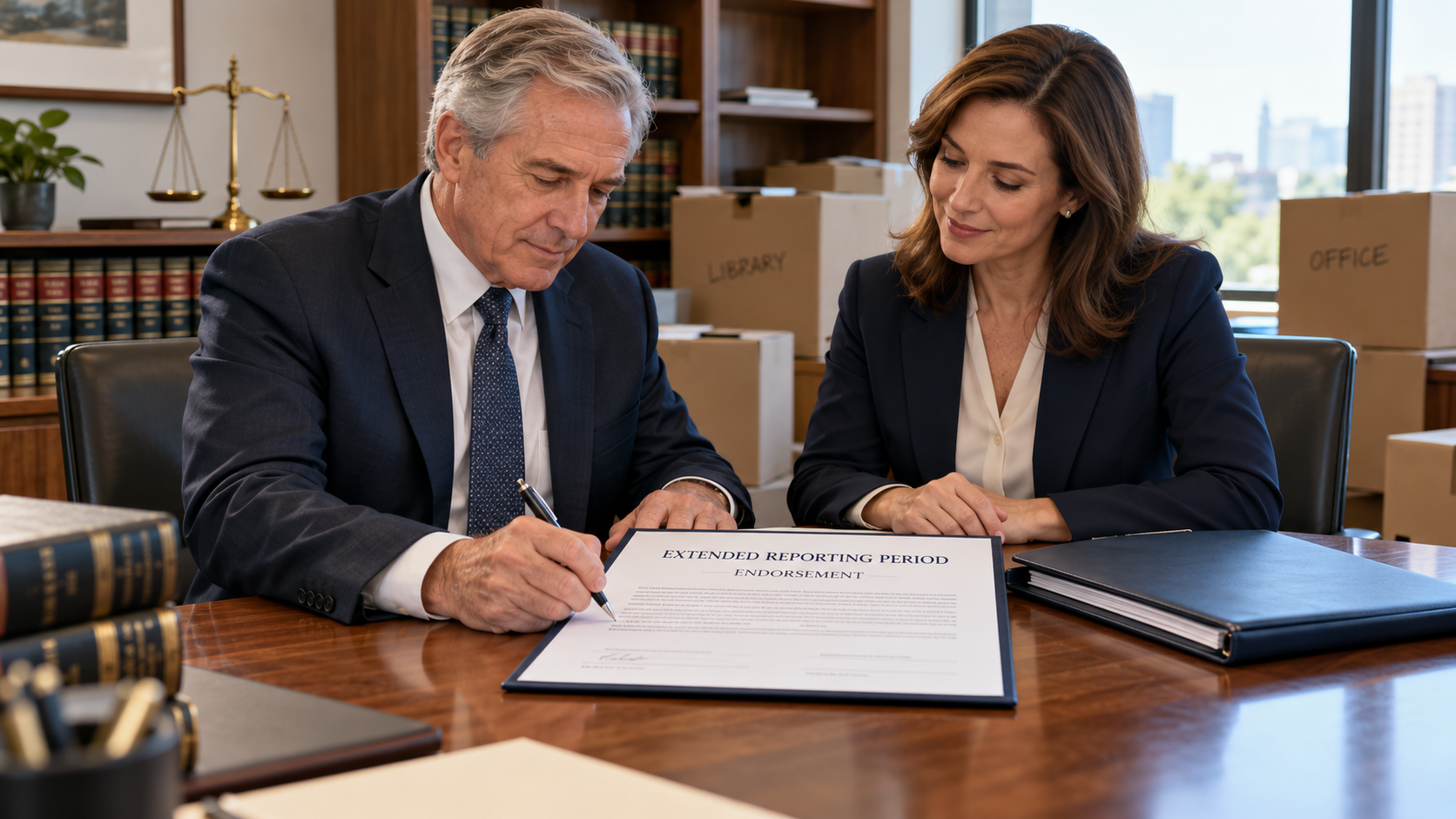
Law Firm is closing and is shopping for a Lawyers Professional Liability Insurance Tail
When a law firm closes, merges with another practice, or ceases operations, attorneys must protect themselves from malpractice claims for past acts. A claims-made legal malpractice insurance policy coverage ends when the policy terminates unless the firm purchases an Extended Reporting Period (ERP), often called “tail coverage.” Or a replacement policy covers past acts.
Lawyers Professional Liability Insurance Tail Coverage can surprise attorneys. However, understanding how tail coverage works helps attorneys make informed decisions and avoid protection gaps.
What Is Lawyers Professional Liability Insurance Tail Coverage?
Lawyers Professional Liability Insurance Tail Coverage allows a law firm to report claims after a claims-made policy ends, provided the alleged error or omission occurred during a period when the policy was active.
Without tail coverage, a former client could file a malpractice claim after the policy expires, leaving the attorney or firm responsible for defense costs and damages.
For firms closing, retiring, merging, or dissolving, tail coverage is an essential component of the firm’s risk management strategy.
Why Does Tail Coverage Cost So Much?
Professional liability insurers calculate the cost of an ERP endorsement as a multiple of the firm’s expiring premium. Depending on the insurer, the cost may range from 200% to 300% of the annual premium or more. When the insured firm satisfies the policy conditions, the insurer cannot decline to issue the ERP endorsement regardless of past claims history.
For example, an insurers offering an unlimited reporting period endorsement costs approximately three times the expiring premium. While the upfront expense seems significant, attorneys should evaluate the long-term protection provided rather than focusing on the purchase price.
The premium reflects the insurer’s ongoing obligation to respond to future claims arising from past legal services without an active policy.
Can Another Insurance Company Sell a Cheaper Tail?
Normally the answer is no.
An ERP endorsement attaches to the policy in force before termination. Because the endorsement modifies the existing policy reporting periods, another insurer cannot add an ERP endorsement to a policy it did not issue.
As a result, the incumbent insurer is the only insurer offering true tail coverage.
Attorneys who shop for lower-priced alternatives discover that other insurers only offer stand-along Extended Reporting Period or Run-off policies.
What Is a Run-Off Policy?
When tail coverage is unavailable certain insurers offer a Lawyers Professional Liability Run-Off Policy.
A run-off policy differs from an ERP endorsement because it is a separate insurance policy rather than an extension of the original coverage.
While run-off coverage may be appropriate in certain situations, law firms should carefully evaluate its limitations:
-
-
- Coverage is frequently issued on an annual basis.
- Renewals remain subject to the insurer’s discretion.
- The policy is underwritten and can decline coverage.
- Coverage terms differ from the expiring policy.
- Premiums normally exceed the ERP endorsement premium.
-
A surplus lines insurer run-off policies can address specific circumstances but is not a substitute for an ERP endorsement.
Why Tail Coverage Is Often the Better Option
For law firms that are permanently closing, merging, or retiring, purchasing tail coverage from the incumbent malpractice insurer remains the preferred option.
A properly issued ERP endorsement:
-
-
- Is not underwritten
- Allows reporting of future claims arising from past work.
- Preserves the policy’s existing terms and conditions.
- It cannot be canceled once purchased.
- Provides long-term protection for former partners and attorneys.
- Eliminates uncertainty surrounding annual renewals.
-
Because legal malpractice claims can emerge years after representation ends, maintaining reporting protection is critical for safeguarding personal and business assets.
Get Lawyers Liability Insurance Malpractice Insurance Quote

Contact Me Today
Lee Norcross, MBA, CPCU
California License # 0D87292
L Squared Insurance Agency, LLC ® DBA in California as L2 L Squared Insurance Agency, License # 0L93416
Managing Director, CEO
Lee@L2Ins.com
616-726-7080