
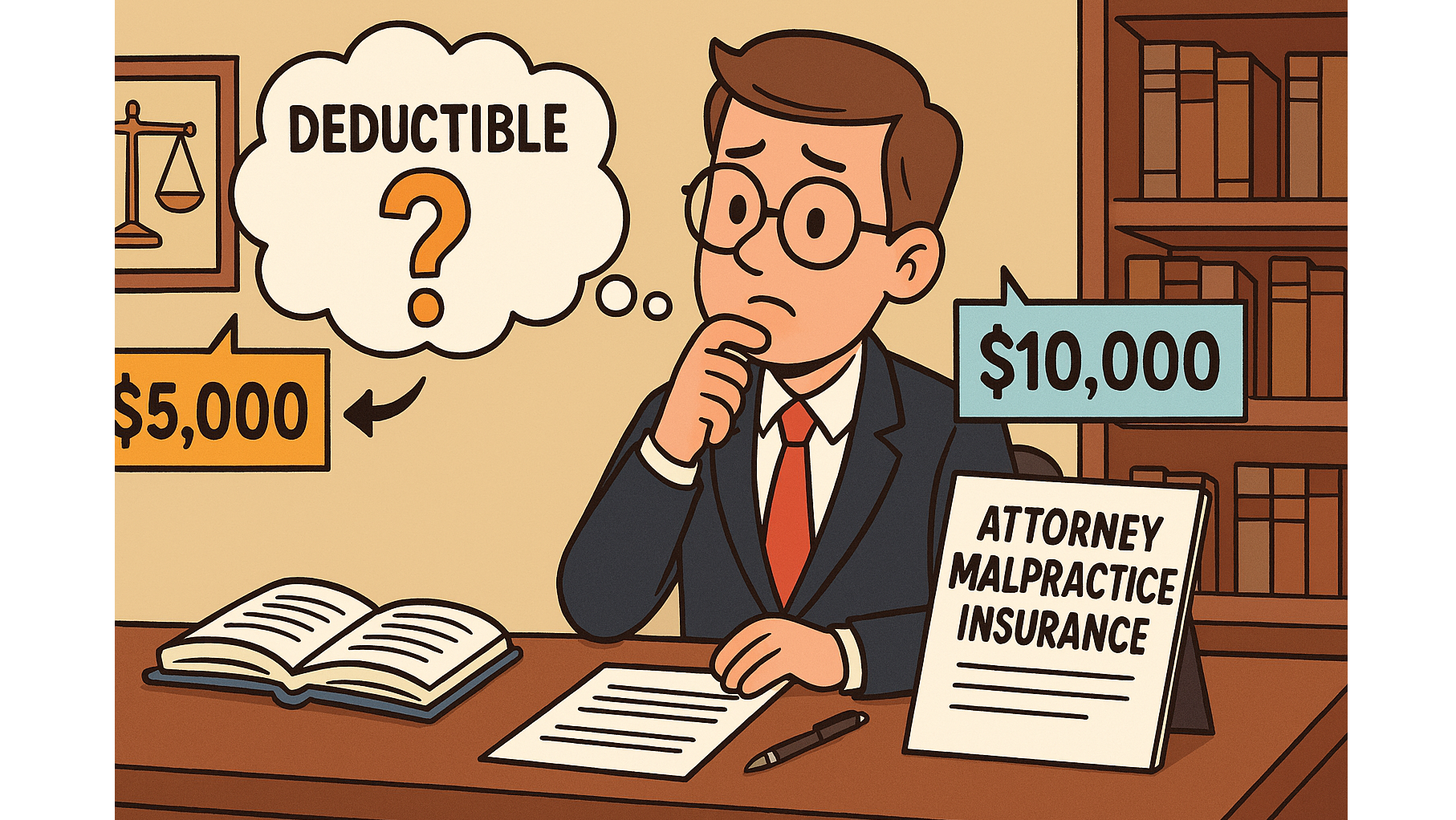
Hudson Insurance Choosing the Right Attorney Malpractice Insurance Deductible for You
Selecting the right deductible option is a strategic decision that balances risk and financial planning. It’s not just about current needs but also about anticipating future scenarios. The deductible amount sometimes called a retention amount makes up part of the exposure for the firm.
Factors to Consider When Choosing a Deductible Option:
- Financial Stability: Assess your firm’s ability to handle out-of-pocket expenses associated with higher deductibles.
- Claims History: A firm with few or no past claims might opt for higher deductibles to reduce premiums.
- Risk Tolerance: Consider how much financial risk you’re willing to assume versus paying higher premiums.
- Practice Area: Certain legal specializations carry higher risk, influencing deductible choices.
- Firm Size: Larger firms may face more claims, making aggregate deductibles more appealing.
Hudson Insurance standard policy has following deductible options included:
- Per Claim Deductible—the firm is responsible for the deductible on each LPL claim. The policy premium is usually less than any other option. Certain practice areas or firm practices may tend to develop multiple claims in a policy year. A per claim deductible can increase the financial risk to the firm.
- Annual Aggregate Deductible—this limits the firm’s deducible cost to the amount listed as the aggregate deductible. A cap is set on the total deductible amount the firm pays within a policy period. No further deductibles apply for that period once you reach the cap. Aggregate deductibles likely increases the premium.
Attorney Malpractice Deductible Options by Insurer
The Lawyer Professional Liability (LPL) different deductible options may be part of the policy or provided as an additional charge. Depending on circumstances a firm may chose more than one deductible option. The deductible options can be in the declarations page or via policy endorsement. Hudson’s policy language that deals with deductibles is as follows:
I. INSURING AGREEMENTS
B. DISCIPLINARY PROCEEDINGS SUB-LIMIT OF LIABILITY
-
- The Company will reimburse the Insured for defense costs incurred by the Insured to defend Disciplinary Proceedings. No deductible will apply to this coverage.
C. NON-PARTY SUBPOENA EXPENSES SUB-LIMIT OF LIABILITY
The Company will pay reasonable and necessary non-party subpoena expenses incurred by the Insured to provide advice regarding the production of documents, to prepare the Insured for sworn testimony and to represent the Insured at a deposition provided that:
This coverage is subject to all of the exclusions of the policy and any coverage defenses which might apply with respect to Claims. No deductible will apply to this coverage. The Insured must give the Company written notice within thirty (30) days of receipt of any subpoena received by any Insured.
III. LIMITS OF LIABILITY AND DEDUCTIBLE
B. DEDUCTIBLE
-
- The deductible amount shown in Item 4.A. of the Declarations will apply to all Damages and Claim Expenses for each and every Claim. The deductible will be applied first to Claim Expenses with any remainder applied to Damages.
-
- The Company’s obligation to pay or to reimburse is in excess of the deductible. The Deductible amount described above is included within and not in addition to the Limit of Liability for Insuring Agreement A. The Named Insured will pay the deductible within thirty (30) days of demand by the Company.
This blog is an excerpt from the policy. The complete policy along with applicable endorsements could impact the information provided above.
Get Lawyers Liability Insurance Malpractice Insurance Quote

Contact Me Today
Lee Norcross, MBA, CPCU
California License # 0D87292
L Squared Insurance Agency, LLC ® DBA in California as L2 L Squared Insurance Agency, License # 0L93416
Managing Director, CEO
Lee@L2Ins.com
616-726-7080