
ABA Formal Opinion 520
What Lawyers Must Tell Former Clients After Representation Ends
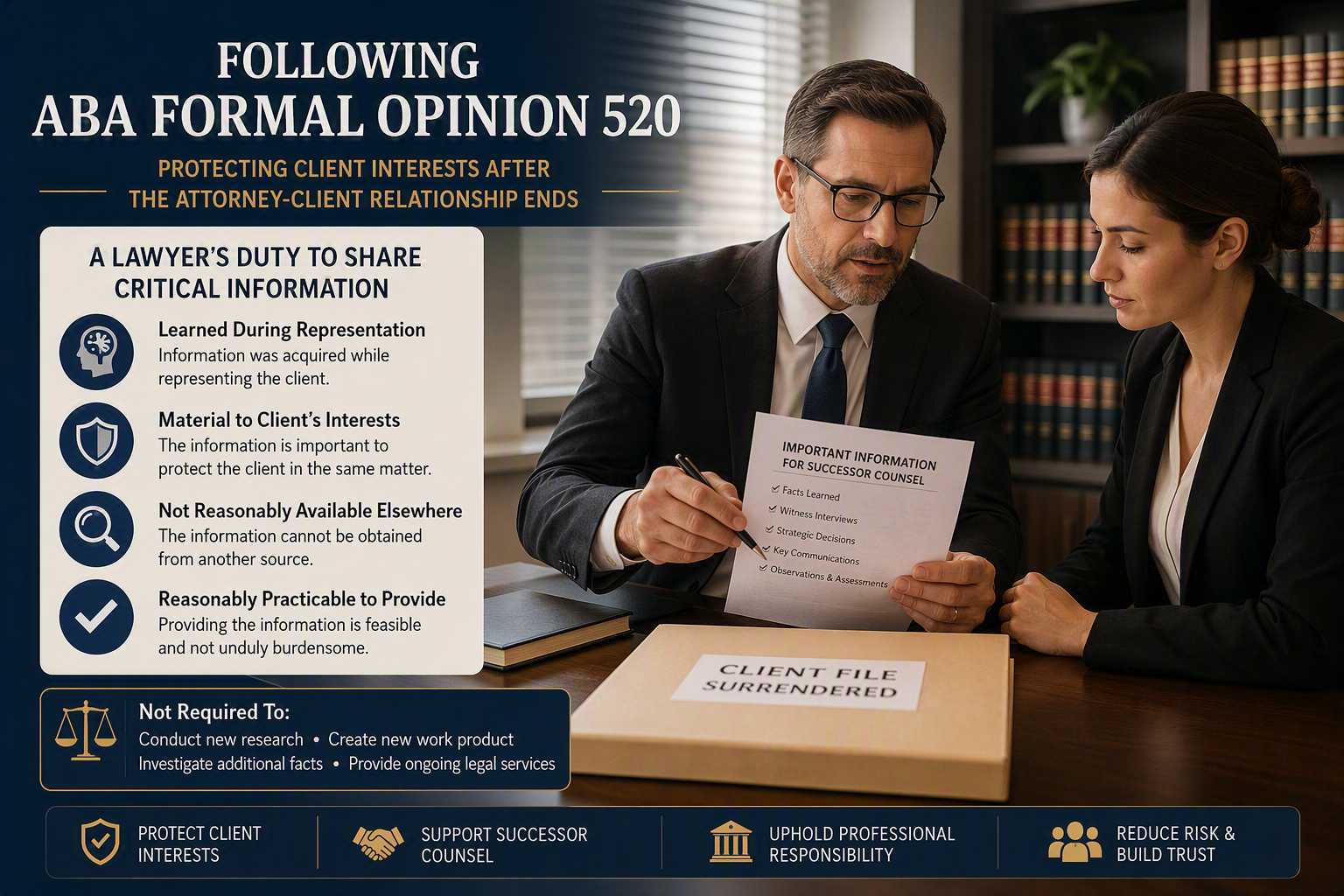
The American Bar Association’s Formal Opinion 520, issued on January 21, 2026, addresses an important ethical question: Under certain conditions, a lawyer’s obligation requires providing information to a former client or successor counsel after the attorney-client relationship ends, even if that information is not contained in the client’s file.
Understanding Formal Opinion 520
Formal Opinion 520 interprets Model Rule 1.16(d), requires taking reasonably practicable steps to protect a client’s interests when representation ends. Traditionally, surrendering the client file and refunding any unearned fees met this requirement. However, the ABA recognized that important undocumented information sometimes exists outside a file.
The opinion requires communicating information acquired during the representation when:
-
-
- The information is not available from another source.
- The information is important to protect the client’s interests in the same matter.
- Providing the information is reasonably practicable.
-
Sharing Certain Information Types?
The ABA noted that the obligation extends to information never memorialized in the client file. Examples include:
-
-
- Unrecorded facts learned during witness interviews.
- Strategic reasoning behind actions taken during the representation.
- Important off-the-record discussions.
- Observations or assessments impacting the client’s interests in the ongoing matter.
- This guidance reinforces the principle that protecting a former client’s interests requires more than simply turning over documents.
-
Important Limits on Requirement
Formal Opinion 520 does not create an unlimited obligation. Lawyers not required to:
-
-
- Conduct new legal research.
- Create new work product.
- Investigate additional facts.
- Generate lengthy written reports.
- Provide ongoing legal services after the representation has ended.
-
Additionally, no obligation exists to provide information that is readily available elsewhere, such as information obtainable from court records or public databases.
Why This Opinion Matters
Formal Opinion 520 underscores the profession’s continued focus on protecting clients and upholding professional responsibility. The opinion recognizes that former lawyers can harm clients’ interests when they retain important knowledge solely in memory. By requiring lawyers to communicate critical information in limited situations, the ABA promotes continuity of representation and protects clients from avoidable prejudice.
The opinion serves as a reminder to maintain thorough records, develop effective file-transfer procedures, and ensure smooth transitions when transferring matters to successor counsel. Firms that proactively document key communications and strategic decisions reduce the likelihood of disputes regarding post-representation obligations.
Conclusion
ABA Formal Opinion 520 provides valuable guidance on a lawyer’s responsibilities after representation ends. While attorneys satisfy their obligations by surrendering the client file and protecting client property, the ABA makes clear that ethical duties may sometimes require the disclosure of critical unrecorded information. Law firms that understand and implement these principles can better safeguard client interests, support successor counsel, and reduce professional liability risks.

Contact Me Today
Lee Norcross, MBA, CPCU
California License # 0D87292
L Squared Insurance Agency, LLC ® DBA in California as L2 L Squared Insurance Agency, License # 0L93416
Managing Director, CEO
Lee@L2Ins.com
616-726-7080
Additional Sources: AttPro Ally Risk Management Newsletter: It’s Time to go Back to School with AttPro