Ethical Breaches and Conflicts of Interest Invalidate Engagement Agreements
Conflicts of interest for law firms, encompass not only ethical concerns but potential malpractice liabilities, and threats to the validity of client engagement agreements. A recent California court decision underscores the importance of diligently identifying and managing conflicts of interest during the client intake process.
Even when attorneys concentrate on preventing actual conflicts, courts emphasize that foreseeable future conflicts pose significant issues when not properly disclosed.
Importance of Conflict Management
Legal ethics emphasize conflict-of-interest compliance. Compliance requires attorneys provide independent, loyal, and unbiased representation. A law firm’s duties to one client cannot compromise obligations to another.
This risk becomes pronounced in mass tort, class action, coordinated litigation, and multi-plaintiff representations where similar clients appear aligned initially but later compete for limited settlement funds or legal resources.
Doe v. McGrath Kavinoky LLP
In Doe v. McGrath Kavinoky LLP (2026) 121 Cal. App. 5th 488, the California Court of Appeal examined a law firm’s representing hundreds of sexual abuse victims pursuing claims against the same defendant. The court determined that potential conflicts existed from the beginning as clients compete for portions of any aggregate settlement and the firm’s ability to maximize recovery for one client harming its obligations to others.
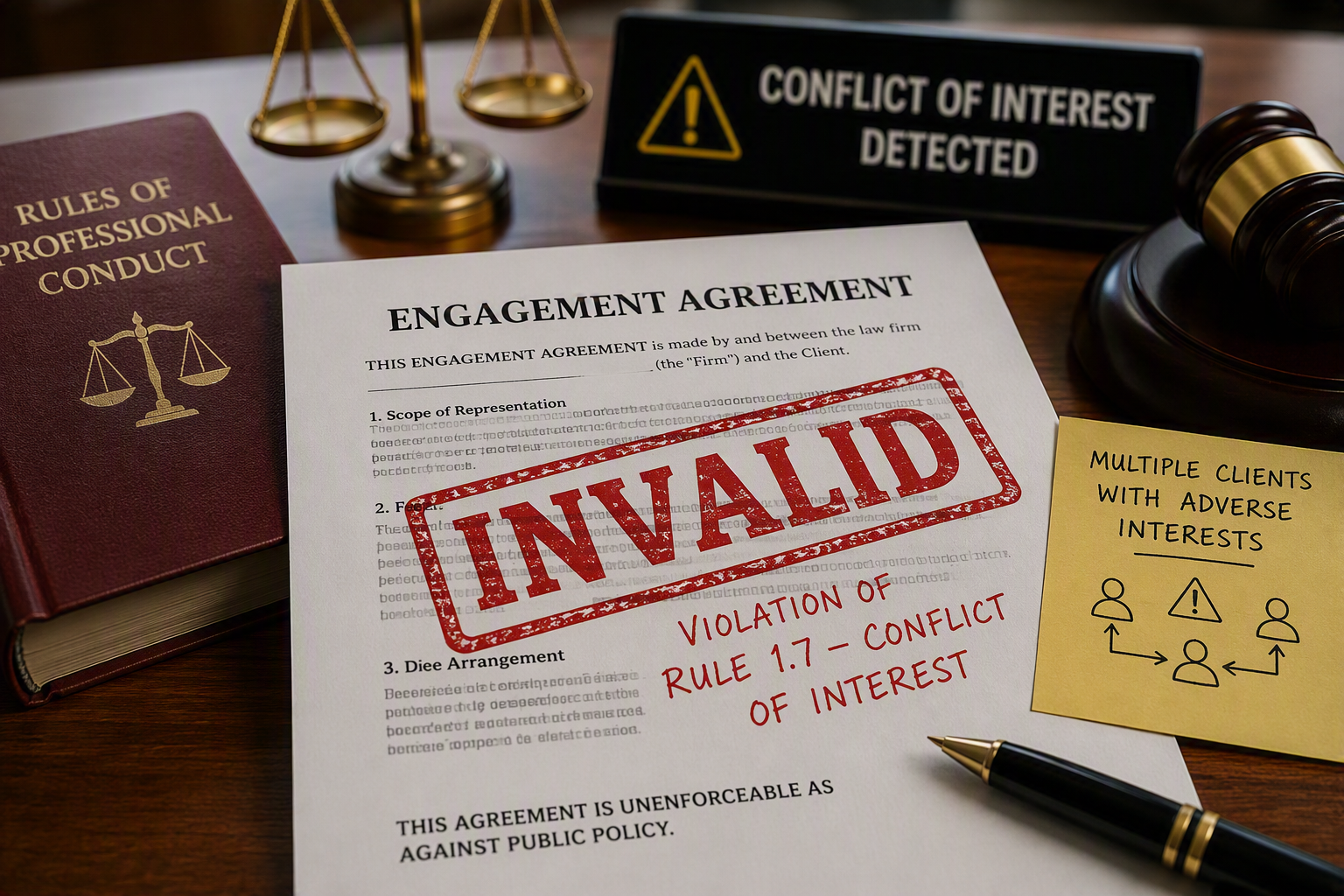
According to the court, the firm’s failed disclosing these risks and violated California’s Rules of Professional Conduct. This resulted in unenforceable engagement agreement including its arbitration clause.
Courts require the client intake process include checking for conflicts of interest and keeping records of the intake process.
Why Engagement Agreements are at Risk
Law firms rely on engagement agreements to establish the scope of representation, fee arrangements, and dispute-resolution procedures. However, courts have held that when an agreement violates ethical rules, the agreement itself is unenforceable as a matter of public policy.
This means that a conflict-of-interest violation potentially jeopardizes protections that firms depends upon, including arbitration provisions designed to manage fee disputes and litigation costs.
Common Conflict Risks for Law Firms
-
-
- Multiple plaintiffs pursuing claims against a common defendant.
- Matters involving aggregate settlements.
- Representations where clients compete for limited recovery funds.
- Cases with significantly different damages, liability exposures, or settlement values among clients.
- Situations in which the firm’s responsibilities to one client materially limits representation of another client.
-
In each scenarios evaluate whether conflicts are foreseeable rather than waiting for disputes to emerge later in the representation.
Best Practices for Law Firm Compliance
Reduce ethical and malpractice exposures by implementing key safeguards:
-
-
- Strengthen Intake Procedures – Conflict review begins before signing any engagement agreement with attorneys assessing both existing conflicts and those that could develop in the future.
- Obtain Informed Written Consent- When potential conflicts exist, give clients clear written disclosures explaining the risks and potential impact on representation. Document before representation begins.
- Reevaluate Conflicts Throughout Representation – Conflicts evolve as litigation progresses. Regular reviews help firms identify emerging issues before they become ethical violations.
- Document Everything – Comprehensive documentation of conflict analyses, disclosures, and client consents are invaluable.
- Seek Risk Management Guidance – Because conflict rules and arbitration requirements vary by jurisdiction, consult ethics counsel or risk management professionals when uncertainty exists.
-
The Bottom Line for Law Firms
Conflicts of interest remain a significant ethical risk facing law firms today. As recent court decisions demonstrate, the consequences extend far beyond disciplinary concerns. Firms face unenforceable engagement agreements, lost arbitration rights, increased malpractice exposure, and reputational harm.
By conducting thorough conflict reviews, securing informed written consent, and maintaining strong intake procedures, law firms better protect their clients, their attorneys, and their business interests. Ethical compliance is not simply about meeting professional obligations. It is an essential component of effective law firm risk management.
Source: Westfield Tip of the Month – Ethical Breaches Can Bar Access to Fee Arbitration (July 2026).
Get An Attorney Malpractice Insurance Quote
Please Note: Unless there is a current countersigned engagement letter on file with Barron & Newburger, P.C., BNPC is not your lawyer.